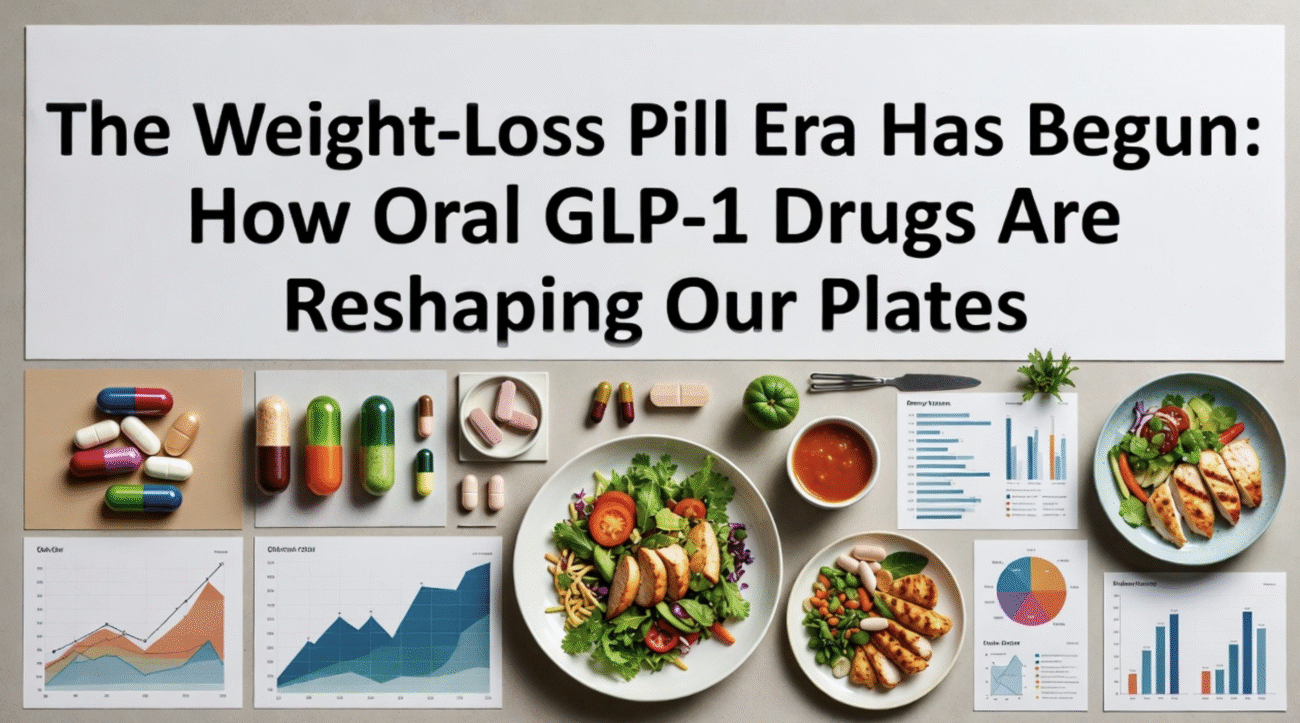
The weight-loss landscape is undergoing a seismic shift in 2026-the era of the weight-loss pill has officially begun. With the recent FDA approval of the first daily oral GLP-1 weight-loss drug, we’re witnessing a transformation not just in treatment, but in how people think about food, appetite, dieting, and everyday eating habits.
From Injections to Pills: A New Chapter in Weight Management
For years, GLP-1 (glucagon-like peptide-1) medications like Wegovy and Ozempic were available only as injections, helping millions manage obesity and type 2 diabetes by mimicking a gut hormone that suppresses hunger and slows gastric emptying. This made meals feel more satisfying, reduced overall calorie intake, and supported meaningful weight loss when paired with healthy lifestyle changes.
Now, thanks to the FDA’s December 2025 approval of an oral Wegovy pill, weight-loss medications are becoming simpler to take, more accessible, and less intimidating. Clinical trials show daily oral semaglutide can deliver up to 16.6 % bodyweight reduction over 64 weeks-results comparable to injectables but without needles.
A Broader Impact on Eating Habits & Nutrition
One of the most fascinating outcomes of wider GLP-1 use isn’t just weight loss-it’s reshaping eating behaviors.
Recent research shows that people using GLP-1 drugs often experience dramatic declines in appetite and a reduction in overall food intake, leading to changes in grocery shopping and meal choices. For example, households with GLP-1 users reduced their grocery spending by over 5 %, particularly on snacks and impulse foods, and gravitated toward healthier options like fresh produce.
This doesn’t mean people stop eating favorite foods, but preferences often shift toward meals that are satisfying, nutrient-dense, and lighter on calories. Because the drugs make users feel full sooner, meals naturally become smaller and more intentional-a change that many dietitians say must be supported with balanced nutrition to avoid nutrient gaps.
Why Diet Still Matters-Even With a Pill
GLP-1 drugs are powerful, but they are not magic bullets. Clinical and public health experts emphasize that nutrition remains essential for long-term success. While GLP-1s reduce hunger and blunt cravings, eating balanced meals rich in protein, fiber, and whole foods helps preserve muscle mass, sustain energy, and support overall metabolic health.
Moreover, research suggests that stopping the medication without lifestyle changes can lead to weight regain-highlighting the importance of integrating personalized nutrition, regular movement, and long-term diet habits as part of a holistic approach.
The Food Industry Is Responding, Too
The shift toward oral GLP-1 use is already influencing food manufacturers and restaurants. Companies are launching “GLP-1-friendly” products with higher protein, improved nutrient profiles, and smaller portion sizes. Menus are adapting to meet evolving consumer demand for nutrient-dense, satisfying meals that fit newer eating habits encouraged by these medications.
Conclusion: A Future Where Appetite and Nutrition Align
The weight-loss pill era isn’t about eating less; it’s about eating smarter. Oral GLP-1 drugs are redefining how we approach hunger, meal planning, and food choices in 2026, but the smartest gains come when science-backed medications and intentional nutrition strategies work together.
